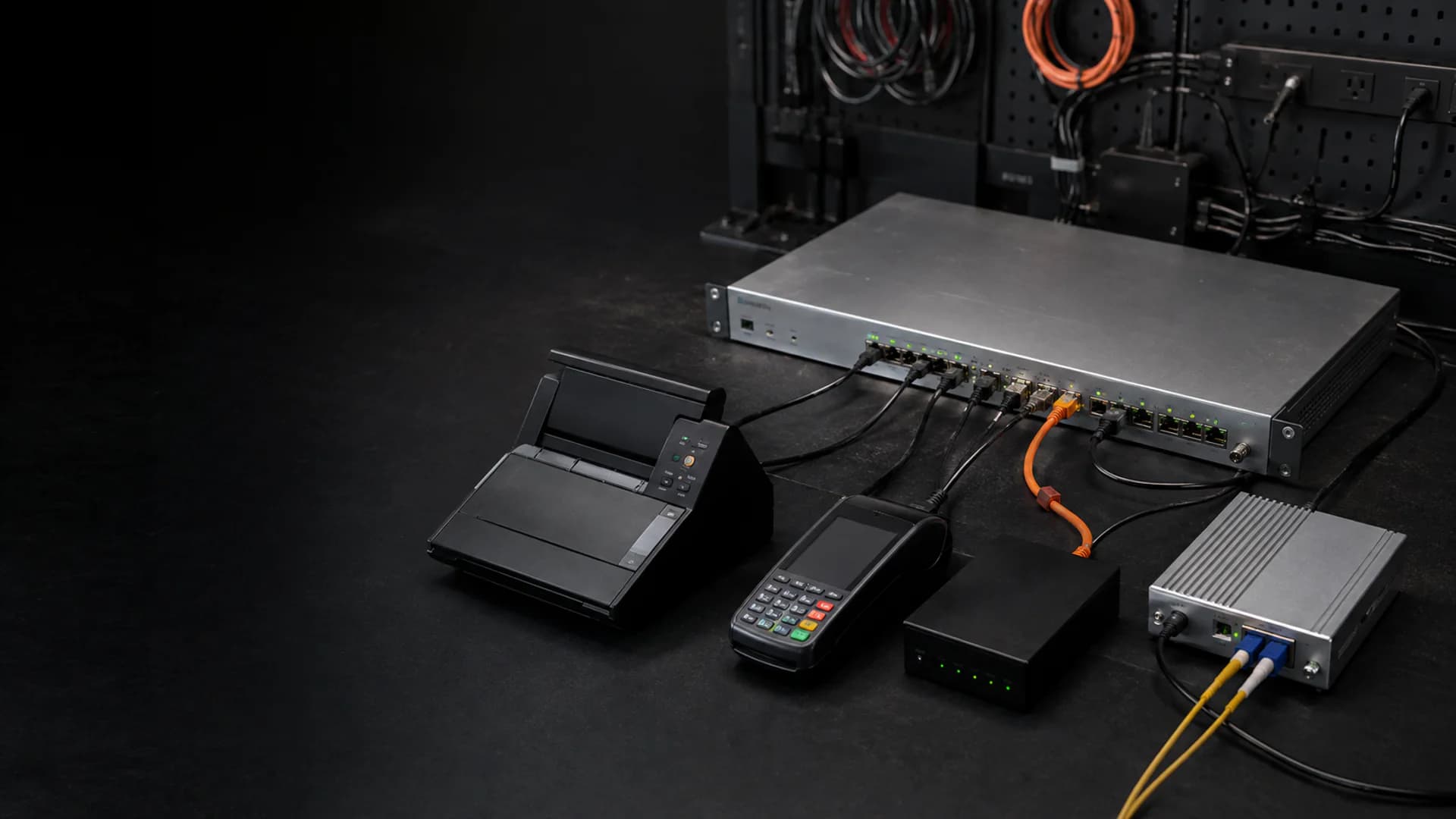
Connect the brokerage stack.
Connect payment providers, KYC vendors, trading platform APIs and internal systems to one operating layer instead of to each other.
Connect once, not pairwise
Systems connect to the layer. Five systems wired to each other is twenty connections; five systems wired to a layer is five.
Failure is visible
A webhook that did not arrive and a call that retried are operational events with a record, not a silence someone notices a week later.
Your systems too
The same interface that carries a payment provider carries your own internal tools, through a documented API and outbound events.
Nothing fails quietly.
Each channel carries its own queue depth and state. A delivery that did not arrive is a visible operational event with a retry count.
Connect once, not pairwise.
Six providers in, four consumers out, one layer between them. Five systems wired to each other is twenty connections; five wired to a layer is five.
Delivered on first attempt
Back-off, then delivered
Raised to the desk
Brokerexa
Single operational record
Integration chapters
How each domain connects, reconciles and alerts through the operating layer.
How a connection works
Each integration is a defined contract: what is read, what is written, what arrives as an event and what happens when it fails. Retries, ordering and reconciliation are handled by the layer rather than by whoever wrote the script, which is what makes the sixth provider cheap.
- ▸Defined contract per integration
- ▸Retry and back-off on delivery failure
- ▸Idempotent handling of repeated events
- ▸Reconciliation against the provider's own record
- ▸Per-integration error visibility and alerting
Payment providers
Deposit and withdrawal flows, settlement notifications and failure handling, reconciled against the client record rather than read from a provider dashboard. Adding or replacing a provider is a configuration change, not a rebuild of the funding flow.
- ▸Deposit and withdrawal flows per provider
- ▸Settlement and chargeback notifications
- ▸Routing rules by method, currency and region
- ▸Reconciliation against provider statements
- ▸Provider swap without changing the client flow
Identity and compliance
Verification vendors write their result to the client record, so onboarding state is one value across the business. Running more than one vendor — by region, by document type, or as a fallback — does not create a second version of the truth.
- ▸Verification results on the client record
- ▸More than one vendor, by region or document type
- ▸Fallback vendor on failure
- ▸Expiry and re-verification tracking
- ▸Screening results held with the same history
Platform APIs
Trading servers are integrations too. Accounts, groups, symbols and balance operations are read and written through each platform's own manager interface, which is what lets a second platform join without a second back office.
- ▸MT4, MT5 and cTrader manager interfaces
- ▸Multiple servers under one operational view
- ▸Bridge and gateway configuration
- ▸Balance operations with an author and a reason
- ▸Per-server configuration under shared rules
Your own systems
A documented API and outbound events, so an internal tool, a data warehouse or a partner system reads the same operational record everything else does — instead of a nightly export that is already out of date when it lands.
- ▸REST API over the operational record
- ▸Outbound webhooks for operational events
- ▸Scoped credentials per consuming system
- ▸Rate limits and delivery guarantees
- ▸Sandbox environment for building against
How systems attach
Every system connects through a supported, observable interface with standard error handling.
Provider APIs
Read / writePayment, verification and communication vendors through their published APIs.
Platform APIs
Read / writeMT4, MT5 and cTrader through each platform's manager interface.
Inbound webhooks
InboundProvider events received, verified, de-duplicated and recorded.
Outbound webhooks
OutboundOperational events delivered to your systems, with retry.
Brokerexa API
Read / writeScoped REST access to the operational record for your own tools.
What it connects.
Reached through each system’s own interface, so nothing has to be replaced to be included.
Trading platforms
Accounts, groups, symbols and execution through the platform's own manager interface.
Payments
Deposits, withdrawals and settlement reconciled against the client record, not a provider dashboard.
Identity & compliance
Verification results land on the client record, so onboarding state is one value rather than three.
Client communication
Voice, messaging and campaign activity logged against the same history the desk works from.
Marks shown are the property of their respective owners and indicate technical compatibility. They are not a claim of partnership or endorsement.
It only works because the others do.
Integrations connect the layer — here is what runs inside it.
Name the integration that hurts most.
Bring the provider or the internal system that keeps breaking, and we will walk exactly how it would attach and what happens when it fails.